Skin Tech 101: Power, Precision, Output
Let’s be honest: the science behind LED light therapy can feel… a little overwhelming.
You’ll see big numbers, multiple wavelengths, and terms like “irradiance” thrown around. It’s easy to assume that more power equals better results. But in reality, your clients’ skin isn’t impressed by big numbers, it responds to consistency and precision.
LED light therapy works by delivering specific wavelengths of light to your clients’ skin in controlled doses. Their skin converts that light into energy, which can support things like collagen production or reducing acne. But here’s the catch: it only works if the right amount of light reaches their skin, at the right wavelength, for the right amount of time.
That’s why “power” alone doesn’t tell the full story. What actually matters is what your clients’ skin receives, not what’s advertised.
At Omnilux, we focus on controlling and delivering precise, consistent output every time. Because when it comes to results, precision beats intensity.
Why Omnilux Measures and Controls LED Output
LED light therapy (AKA photobiomodulation) works by delivering specific light wavelengths to the skin in controlled doses. Skin absorbs the light and converts it into energy, which can stimulate various effects depending on wavelength, dosage, and distance from the skin.
When brands discuss “power” in LED light therapy, they often present it as a range. But that number alone doesn’t tell you how the device will impact your clients’ skin. Their results will hinge on the light energy their skin actually receives.
These terms play a crucial role in how an LED light therapy device affects your clients’ skin:
-
Wavelength (nm): The type or “color” of light delivered
-
Role: Determines how the device affects your clients’ skin at a cellular level
-
LED light therapy wavelength examples: Red, near-infrared, blue
-
Role: Determines how the device affects your clients’ skin at a cellular level
-
Irradiance (mW/cm²): How much light energy reaches the skin
-
Role: Determines the device’s effectiveness for the targeted skin concern
-
Role: Determines the device’s effectiveness for the targeted skin concern
-
Dose (J/cm²): Total energy delivered over time
-
Role: Determines the device’s effectiveness and safety
-
Role: Determines the device’s effectiveness and safety
-
Treatment geometry: The distance between the light bulbs and the skin; fit and coverage
-
Role: Determines light absorption
-
Role: Determines light absorption
LED light therapy research confirms that treatment outcomes depend on delivering these specs within the optimal range. But more is not always better, and exceeding clinically-studied dosages may contribute to skin irritation and barrier disruption.
The Omnilux approach: Omnilux LED light therapy devices are FDA-cleared and designed as complete systems, with LEDs, a user-friendly controller, and recommended treatment protocols that work together to deliver a consistent light output. Plus, they’re backed by over 40 clinical studies confirming their safety and efficacy.
Why “More LEDs” or “More Colors” Can Mean Less
While comparing LED light therapy devices, it can be easy to assume that more LEDs, more wavelengths, or more power place a device above the rest. But in the world of photobiomodulation, more can actually mean less.
If the device’s total power remains the same, adding extra wavelengths may split that power across multiple channels. Each wavelength may receive less power, the device may alternate its total output between wavelengths, or the output may be reduced to meet safety guidelines. This results in a weaker dosage and potentially inferior results.
Here’s the bottom line: Adding extra wavelengths or colors can ultimately dilute the dose for each wavelength, unless the device is specifically engineered to maintain both irradiance and total dose.
Why Precision Beats General Ranges
In LED light therapy, broad specs (like 630-660 nm) don’t tell the full story, and those missing details lead to missed opportunities for your clients’ skin. Precise, measurable specs reflect clarity and transparency while supporting consistent results.
To confirm that a device has a measurable, repeatable output to support consistent results, look for these key specifications:
-
Peak wavelength (a single number, not a range) with a tight tolerance (the distribution of energy at the specified wavelength)
- Irradiance measured at the skin
- Dose delivered per session
- A defined treatment time and protocol
- Safety and testing standards
Omnilux devices are FDA-cleared, meaning they’ve undergone rigorous safety testing and are backed by data proving their efficacy. They present clearly defined output specs and protocols in their documentation, so you never have to wonder what your clients’ skin is receiving in your practice.
The 5 LED Metrics That Actually Matter
Irradiance, distance to skin, dose, coverage uniformity, and clinical evidence go deeper than marketing claims, making a legitimate difference in your clients’ LED light therapy results.
Irradiance (mW/cm²) at the Skin
In LED light therapy, irradiance refers to how much light energy is actually delivered where the device is used. This metric is more meaningful when paired with the context of distance, which illustrates how much light energy actually reaches your clients’ skin.
Distance-to-Skin Consistency
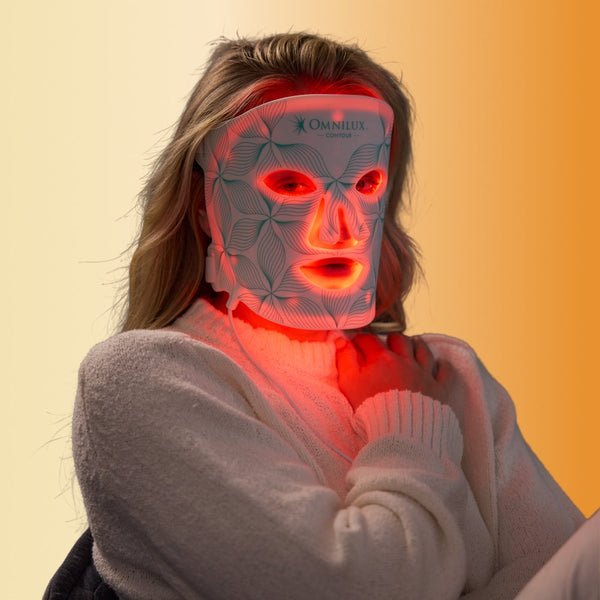
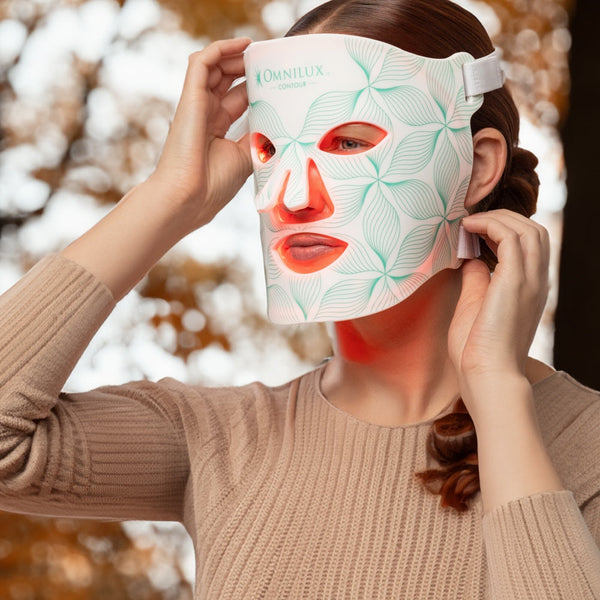
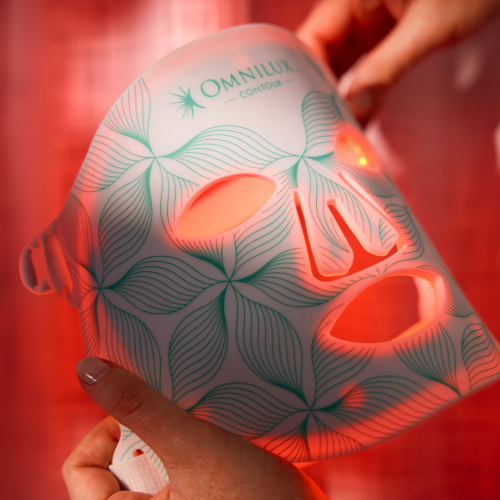
Irradiance drops as the distance between the bulbs and your clients’ skin increases. Even small gaps can reduce the delivered dose, making LED light therapy less potent. Devices that contour to the treatment area to minimize gaps are ideal.
Dose (J/cm²) per Session
This metric impacts the cumulative energy your clients’ skin receives over time. While it can be tempting to go for the highest possible dose, this doesn’t necessarily result in faster or more dramatic results. Consistency matters far more than intensity, especially if that intensity isn’t repeatable.
Coverage Uniformity
An even distribution of LEDs ensures uniform exposure across the skin. When light is unevenly distributed, some areas may receive more concentrated light while others receive less, leading to inconsistent results. Uniformity relies on a thoughtfully designed device with evenly distributed bulbs and a flexible material that conforms to your face, neck, or body.
Clinical Evidence and Safety Testing
Your clients’ skin health matters: Don’t leave it up to chance with an untested device. Prioritize brands like Omnilux that offer:
- Clinical studies
- FDA clearance
- Safety testing standards
- Evidence-based dosing protocols that align with up-to-date photobiomodulation research
The Research Behind the Results
With a foundation of decades of scientific research and over 40 peer-reviewed clinical studies, Omnilux is a leader in science-backed LED light therapy. Omnilux devices are built using proprietary medical device technology, combining research-based wavelengths with flexible designs to ensure optimal skin contact and consistent performance in your practice.
Here’s a curated selection of clinical studies demonstrating the effectiveness of Omnilux LED light therapy devices:
-
A 7-week, open-label study conducted by Dr. Glynis Ablon, MD, Omnilux Scientific Advisory Board member, found that Omnilux Clear, which uses 633 nm red and 415 nm blue light wavelengths, significantly reduced acne vulgaris lesion counts.
-
In a clinical study of Omnilux Contour Face, which uses 633 nm red and 830 nm near-infrared light wavelengths, 93% of patients agreed that their skin felt softer, smoother, brighter, and refreshed after just one treatment. After a complete 4-week treatment course:
- 84% strongly agreed that their skin felt softer and smoother
- 80% strongly agreed that their skin felt plumper and more hydrated
- 76% agreed that their skin felt firmer or tighter
- 84% strongly agreed that their skin felt softer and smoother
Clinical studies using blue and red light wavelengths have shown visible improvements in acne and skin rejuvenation, respectively, with good tolerability, while broader research continues to demonstrate how wavelength, irradiance, and dose influence the skin’s response.
These are just the beginning of the clinical research underpinning Omnilux LED light therapy devices. For a deeper look at the science, explore the Omnilux Clinical Bibliography.
The Takeaway: What Defines a Well-Designed LED Device
A “good” LED light therapy device isn’t defined by the longest list of wavelengths or the punchiest power output. Look beyond the marketing materials to find a device that delivers:
- Research-backed light wavelengths that align with your clients’ skincare goals
- Optimal irradiance at the skin
- A consistent, predictable dose
- Even coverage and a secure, comfortable fit
- Documented results backed by clinical research, safety testing, and FDA clearance
When you understand what matters most in an LED light therapy device, you can cut through the noise and make a smart, strategic investment in your clients’ skin future.
Ready to bring Omnilux LED light therapy to your practice? Apply to become an Omnilux Provider and offer your patients a clinical-strength addition to their home skincare routines.
Want to learn more before you commit? Explore Omnilux LED devices, benefits, and how to use them in a skincare routine.