Skin Tech 101: Not all LEDs Are Created Equal
Feeling like you’re seeing double (or triple or quadruple) while searching for an LED light therapy device to offer at your practice? On the surface, these devices might appear identical in shape and red light function, but their performance can vary dramatically based on wavelength and output. These key differences can impact your ability to make confident recommendations and accurately manage your clients’ expectations.
LED light therapy isn’t just about switching on a color of light. The real results hinge on whether the device emits a clinically studied wavelength at a measured output evenly across your clients’ skin, and consistently across every session. Below, we’ll break down exactly why these metrics matter, and how to find them in a reputable LED light therapy device.
Why Similar-Looking LED Devices Can Perform Differently
As a provider, you may find multiple LED light therapy devices that appear interchangeable, both in design and the light they emit. But it takes a deeper, more discerning look to find out if they’ll deliver comparable results for your clients.
Your clients’ skin responds to the treatment it actually receives, not what’s been advertised. In the context of LED light therapy, this boils down to three crucial technical specs: wavelength, output, and consistency.
What Actually Determines LED Performance
Wavelength accuracy, light output, and consistency define what to look for in an LED device, transcending marketing claims to determine how a device truly performs.
Wavelength Accuracy (nm)
When people think about LED light therapy wavelengths, colors like red or blue often come to mind. But wavelength is more specific than the color alone.
“Red light” is a category, encompassing wavelengths ranging from approximately 620 nm to 750 nm. Different wavelengths within this spectrum affect the skin in very different ways; even small shifts in wavelength can alter your clients’ results.
To ensure safety and effectiveness in your LED device recommendations, choose a device that delivers clinically studied wavelengths for the skin concerns your clients want to address. For example, 633 nm red light is commonly discussed in literature in connection with natural cellular repair and renewal for a more radiant complexion, aligning with published research into red light therapy wavelengths for skin rejuvenation.
Output (Intensity)
LED light therapy output determines how much light actually reaches your clients’ skin. It might sound simple, but clearly measured and disclosed outputs aren’t universal across all LED devices available today. Without this specification, it’s challenging to understand the dose being delivered (and how it fits into a consistent skincare routine).
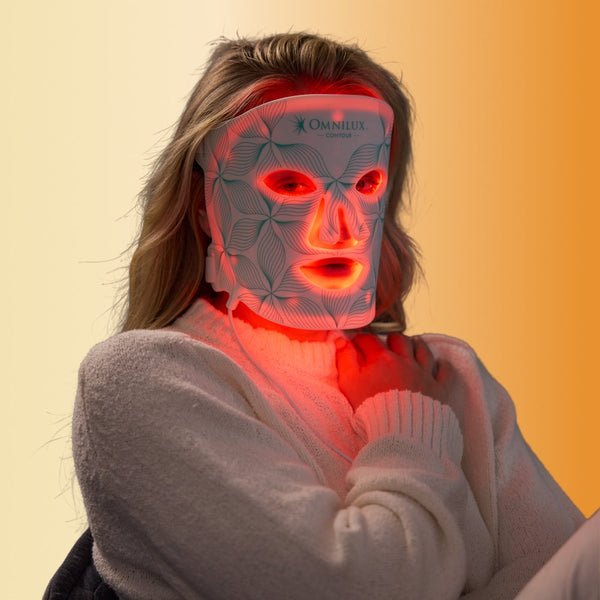
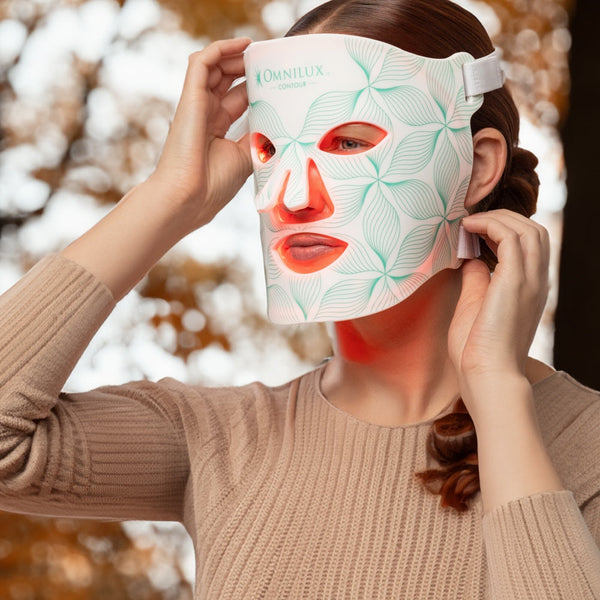
Essentially, wavelength is the type of light, and output is how much of that light your clients’ skin receives. Alongside a clinically studied wavelength, look for a defined, documented output in your LED light therapy device recommendations. For example, Omnilux Contour devices are designed for an optimized energy output of 30mW/cm2 at the skin’s surface.
Consistency and Uniformity
Consistent light delivery matters. When an LED device distributes light unevenly, some areas may absorb very little light while others receive concentrated light. This can lead to inconsistent results, even if your clients diligently follow an LED light therapy routine.
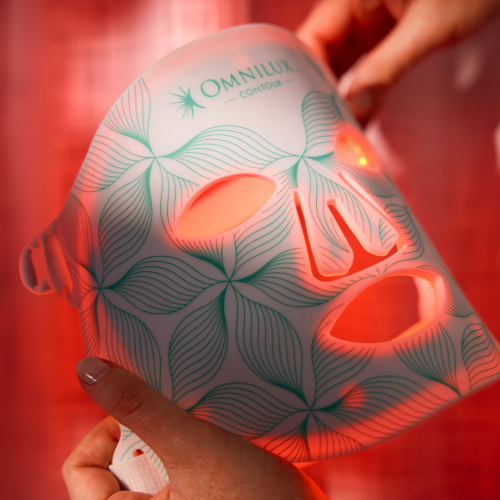
A device’s performance relies on even light delivery across the entire treatment area, giving it the best possible chance of achieving your clients’ desired results. Look for a device with evenly distributed bulbs that’s constructed of a flexible material; when a device conforms to the face, neck, or body, it may help support more uniform light delivery across the skin.
Dose Control
To understand how dose impacts results, let’s first clarify exactly how LED light therapy works: Also known as photobiomodulation, LED light therapy delivers controlled doses of specific wavelengths to support skin processes at the cellular level. The skin absorbs the light at different depths, depending on the wavelength, which stimulates various results (for example, boosting new collagen or increasing elastin production).
This is where dose comes into play: Too little light may fail to produce visible improvements, but more light doesn’t always translate to better or faster results. Ultimately, dosage only matters if the output is consistent.
The Issue with Vague Specs and “Ranges”
As you navigate the landscape of LED light therapy devices available today, you may notice options that advertise broad ranges or entirely omit key specifications. While they may use compelling marketing to distract from this omission, know that this missing data may compromise your ability to confidently align with your client’s needs.
Without defined wavelength and output data, it’s challenging to effectively compare devices or align your clients’ routines with what’s used in clinical research. These concrete metrics should serve as the starting point in your search for LED technology to recommend, providing a precise understanding of how the device will affect your clients’ skin.
What Omnilux Does Differently
Omnilux LED device designs are supported by clinically studied wavelengths and measured output, with over 40 peer-reviewed clinical studies and FDA clearance backing their technology. Given that your clients’ skin responds to what it receives, not just what a spec sheet or marketing campaign suggests, this provides confidence that your recommended LED device will reflect well on your practice.
These metrics aren’t just nice-to-haves; they’re the foundation upon which Omnilux devices are built. In Omnilux’s Clinical Bibliography, you can refer to clinical studies with evidence supporting each device in wavelength. There’s no need to hunt for specs or clarification: Omnilux makes key device specifications available upfront.
What to Look for When Comparing LED Devices
For an effective LED device comparison, look for:
- The exact wavelengths (nm) it emits, not just the color categories (red light, blue light, etc.)
- The measured output (mW/cm2), not just a vague range
- Precise treatment times linked to consistent dosing
These criteria help ensure that the LED devices you’re using in practice, or recommending for at-home use, are rooted in LED light therapy research.
Ready to bring Omnilux LED light therapy to your practice? Apply to become an Omnilux Provider and offer your patients a medical-grade addition to their home skincare routines.
Want to learn more before you commit? Explore Omnilux LED devices, benefits, and how to use them in your clients' skincare routine.